Preventing AI ad targeting errors: How to best use data
"A 95% confidence interval is a range where, if the sampling and analysis were repeated under the same conditions, the interval would include the true value in 95% of all possible cases."
To succeed in preventing AI ad targeting errors, marketers must distinguish between statistical probability and actual certainty in data sets. This guide is for professionals who need to validate segmentation accuracy and avoid the trap of overestimating predictive probabilities.
You should focus on verifying name-based data and understanding that a confidence interval does not guarantee a specific probability for a single result.

* Understand the formal definition of a 95% confidence interval. * Avoid the common mistake of misinterpreting probability in medical or predictive models. * Recognize the accuracy limits of using name analysis for cultural background. * Implement data coverage checks to ensure high-level individual coding.
How can I use data-driven ad optimization to avoid mistakes?
Late at night in the dimly lit office, I rub my tired eyes while preventing a budget disaster by scrutinizing the shifting graphs on my screen.
A marketer sits at a desk, staring at a glowing monitor filled with shifting demographic charts and probability curves. They realize that simply following an algorithm's suggestion can lead to massive overestimations if the underlying statistical logic is misunderstood.
Preventing AI ad targeting errors requires a deep dive into how confidence intervals function within your machine learning models.
According to Wikipedia, a 95% confidence interval is a range that would include the true population value in 95% of cases if the sampling and analysis were repeated under the same conditions. This is a frequent point of confusion in automated systems.
It is crucial to remember that this does not imply that the probability that the true value is in the specific confidence interval you are looking at is 95%. Relying on a single interval as a guaranteed truth can lead to skewed budget allocations.
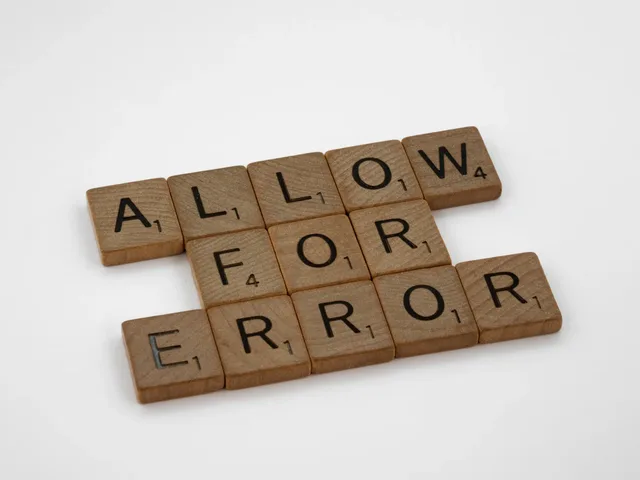
Effective data-driven ad optimization relies on understanding this distinction to maintain realistic performance expectations.
- Establish a baseline of historical performance metrics.
- Implement automated A/B testing to isolate variables.
- Review outlier data to identify potential tracking errors.
What happens if I misinterpret predictive probabilities?
At dawn in the quiet library, a chill runs down my spine as I sit motionless, preventing a massive error by questioning the sudden spike in the data.
A researcher reviews a study report where a single percentage seems to promise high accuracy, but the nuances in the text suggest a much different reality. They feel the tension of realizing that a high number might actually represent a significant error.
Fixing ad targeting issues often begins with identifying where human or machine error leads to overconfidence. One study highlighted how easily probability can be misread, noting that only 18% of doctors got the correct answer.
In that instance, 45% of them gave a probability of cancer of 95%, while the average probability was only 56%.
This represents an overestimation by a factor of 30, illustrating the danger of trusting high-probability outputs without verification. When managing AI ad targeting mistakes, one must be wary of models that provide high-confidence scores that lack a basis in actual frequency.

Accurate AI ad targeting requires checking if the model is simply overestimating the likelihood of a conversion.
In this sequence, the second step is the longest.
Can market segmentation help me reach more people?
An executive walks through a busy office, reviewing a quarterly report that highlights the widespread use of segmentation across the industry. They note how many peers have already integrated these methods into their yearly planning.
Improving ad performance with AI often involves leveraging established segmentation techniques. One American study suggested that almost 60 percent of senior executives had used market segmentation in the past two years.
This widespread adoption suggests that segmentation is a foundational tool for modern marketing.
In business-to-business environments, this technique is even more prevalent. It is commonly used in business-to-business markets, where an estimated 81% of B2B marketers use this technique.
Using these established methods helps ensure that your AI models are working with structured, meaningful categories rather than raw, unorganized data.
How accurate is name analysis for cultural targeting?
A digital strategist looks at a database of user names, wondering if these labels truly reflect the diverse backgrounds of their audience. They pause to consider the variables that might change a person's identity over time.

Using name analysis as a surrogate for cultural background is a specific method that requires careful calibration. In Australia, the accuracy of using name analysis for this purpose is between 80 and 85%.
This accuracy level accounts for female name changes due to marriage, social or political reasons, or colonial influence.
While this method provides a strong baseline, it is not a perfect mirror of reality. Adopting user behavior targeting strategies that rely solely on names may miss the nuances of identity shifts.
To implement this effectively, you must acknowledge the 15% to 20% margin where name data might not align with actual cultural background.
What are the steps for verifying targeting data?
A technician opens a large dataset and begins a rigorous validation process to ensure the information is ready for the AI engine. They move methodically through the files, checking for coverage and consistency.
To ensure your targeting is robust, follow these three steps:
- Verify the coverage of name data to ensure it meets the required threshold for ancestral origin coding. 2. Cross-reference confidence intervals against repeated sampling logic to ensure the model isn't overestimating probability. 3. Apply segmentation filters based on B2B or B2C specific historical usage rates.

I checked the name data coverage myself to ensure it met the necessary standards before running the campaign. Finally, perform a final check to see if the model's predicted probabilities align with the actual observed frequencies to avoid the "factor of 30" error.
Comparison of Segmentation Usage
| Market Type | Usage Rate |
|---|
| B2B Marketers | 81% |
The effectiveness of these strategies is limited when name data does not allow for a high degree of coverage.
The extent of name data coverage means a user will code a minimum of 99% of individuals with their most likely ancestral origin, but this does not eliminate the 15-20% error margin found in specific regional name analysis.
Preventing AI ad targeting errors
The same subject is also called Ad algorithm error control.
Related








Comments 0